TOPPAN MOORE Printing works
To understand the Tamura and Anritsu Phonecard systems, we need to start with the card manufacturer used by both companies, Toppan Moore.
Toppan Moore was established in the 1960s, and were heavily involved in the printing of business forms, as well as data and software services. In the early 1980's, they began to manufacture Phonecards for both Tamura and Anritsu, for a new generation of Phonecard payphones. As a general rule, Toppan Moore did not manufacture Phonecards for themselves, but we have found one card from Toppan, based on the magnetic technology used by COPYTEX in Germany for the Bamberg Phonecard trials.
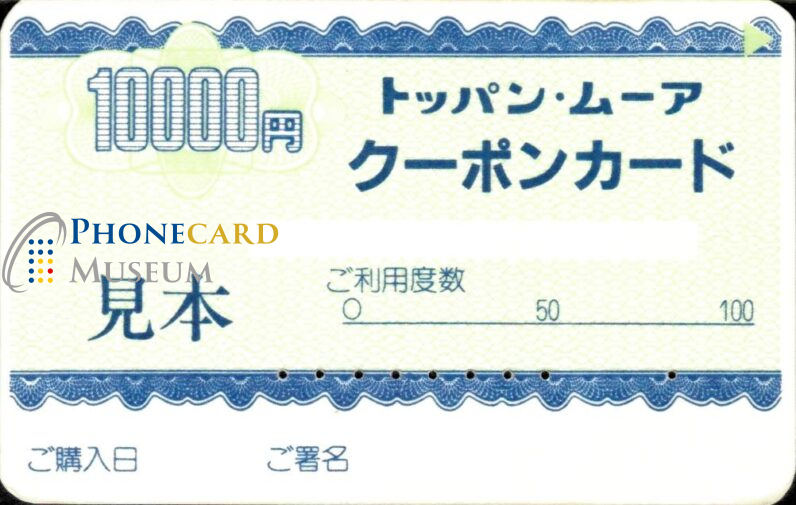
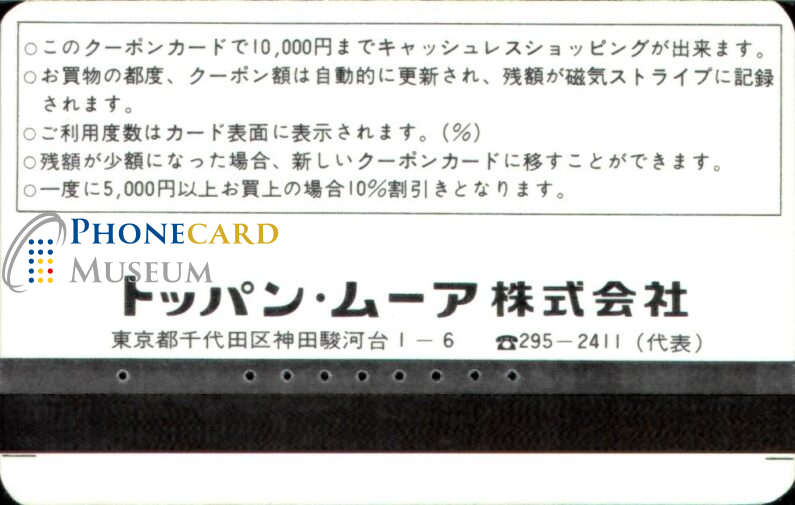
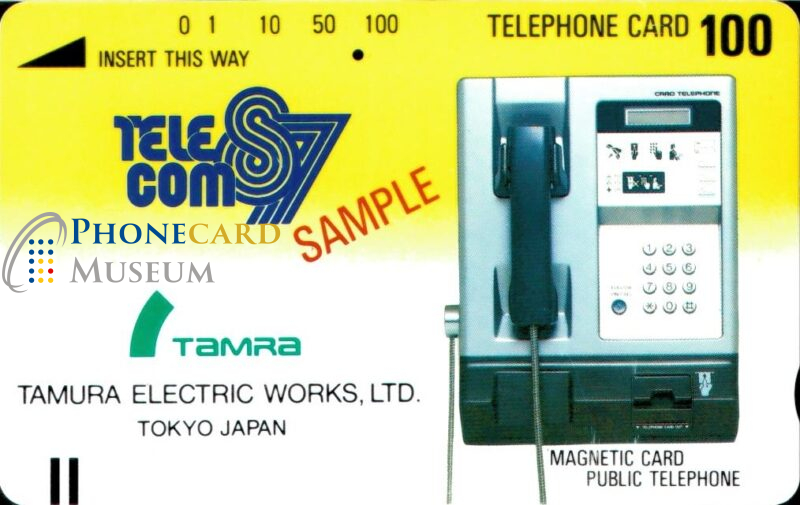
We have included extra images here to show the content in English, and compare to a similar German COPYTEX card from 1982. This card seems to be unrelated to the Tamura and Anritsu production, but is still interesting in a historical context. This card is not necessarily a phonecard.
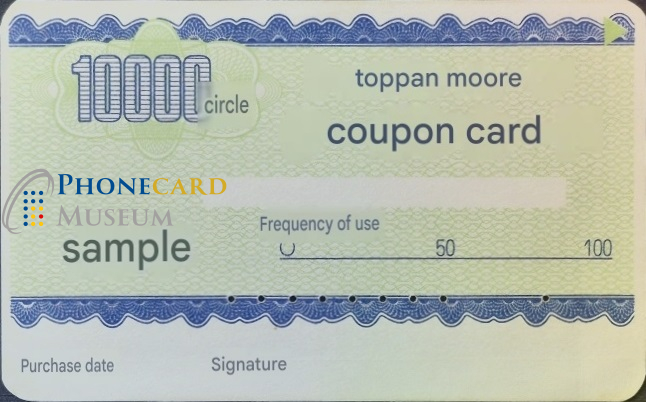
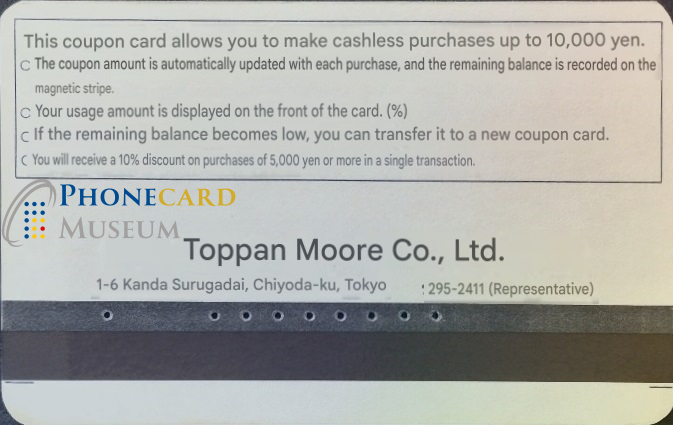
And comparison with Germany Bamberg COPYTEX Phonecard
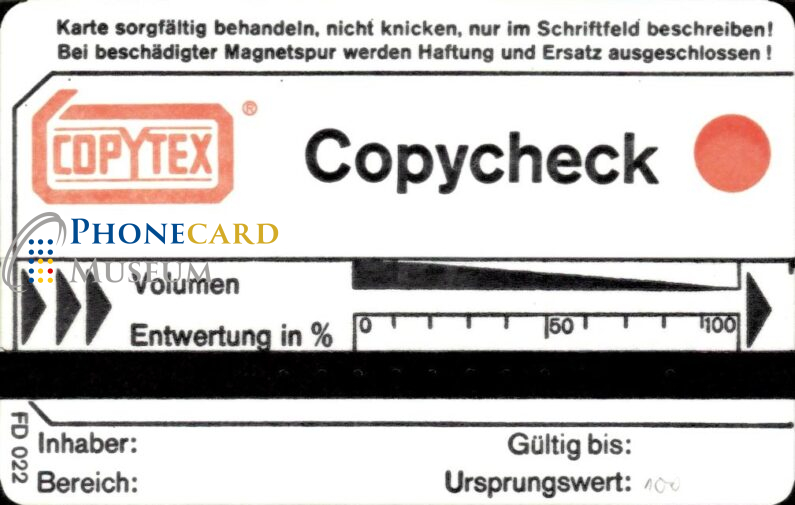
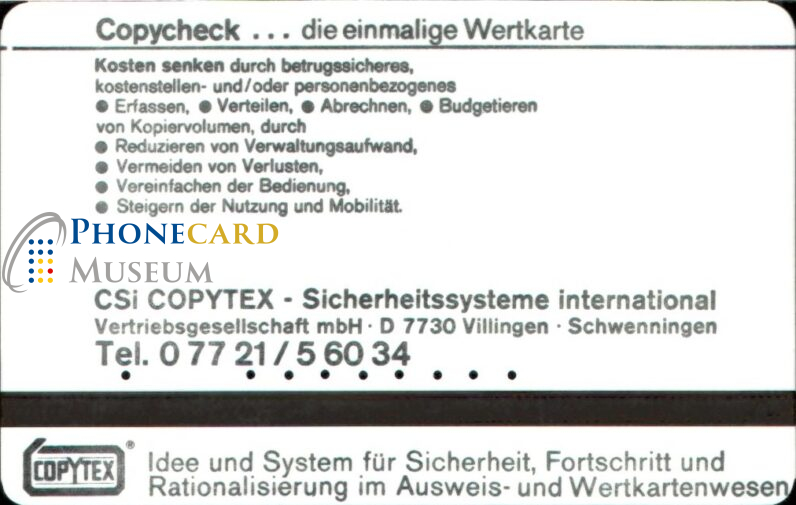
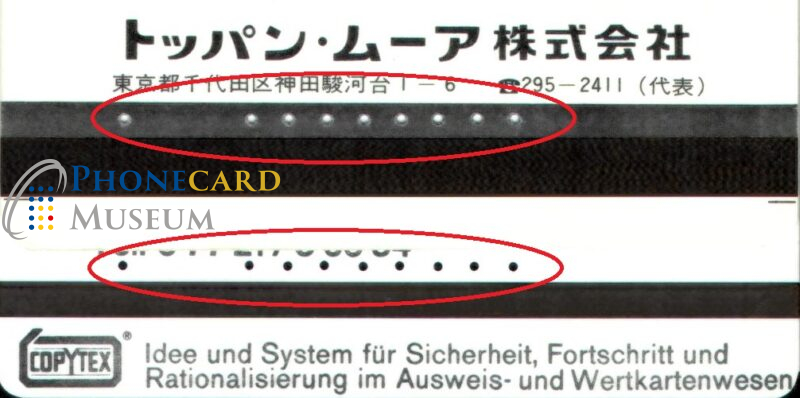
Here is a photo to compare the distinctive punch hole card recognition system of COPYTEX. These are NOT usage punch holes, but a card authentication security feature of the COPYTEX system.
Magnetic Phonecards of Tamura and Anritsu
The main type of Phonecards printed by Toppan were a thin, flexible plastic card, coated on the reverse with a magslurry coating. Cards produced in the early 1980’s were slightly thicker, and the majority of cards were stamped on the front lower edge with a serial number which is not generally easily visible, since no ink was used. In later years the magnetic coating was reduced in thickness, and, instead of a matte grey coating it was refined to silver coloured thin layer in early 1987. The cards produced for Japanese NTT however, continued to use the old formulation, as well as UAE issues up to late 1980's. By 1990, Toppan began using a bronze magnetic reverse for most NON-Japanese Tamura cards, but continued silver for Anritsu cards.
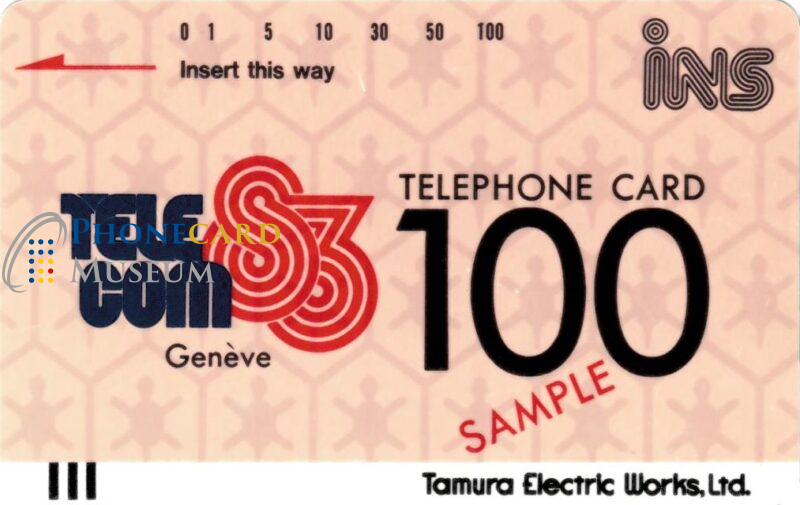
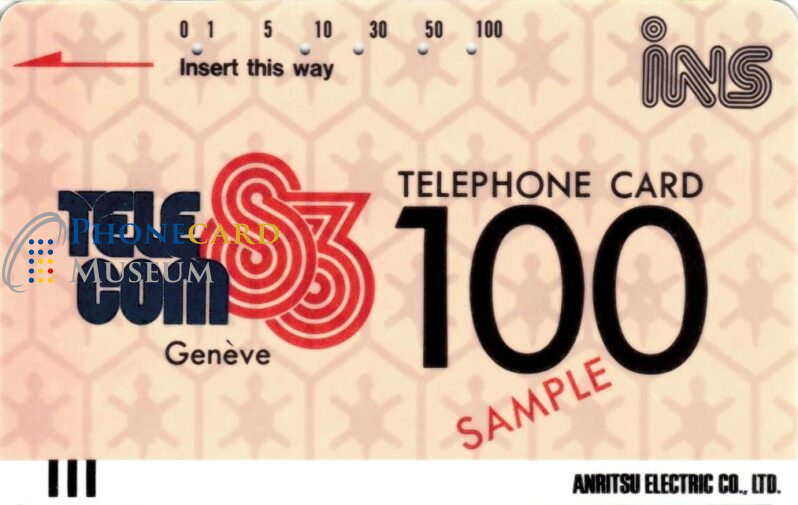
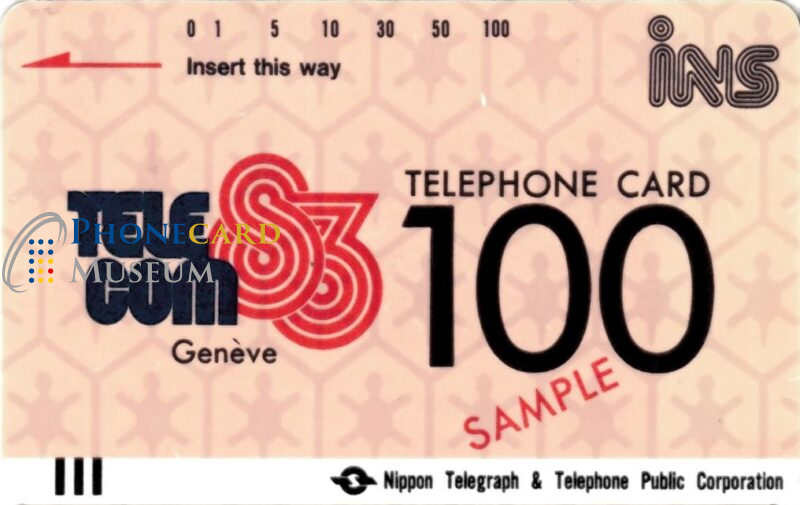
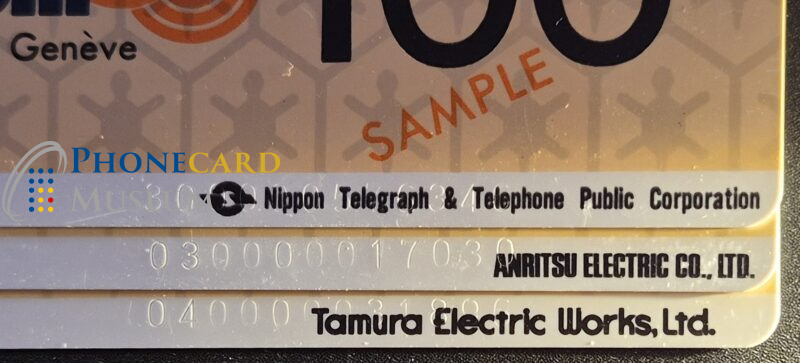
Tamura were successful in 1982, being fully contracted to supply payphone services to Japan, and to date had produced many hundreds of thousands of different designs. In 1983, both Tamura, and Anritsu produced a phonecard for demonstration at Telecom 1983 in Geneva. A similar card was produced for the telephone company of Japan. (carrying the Den Den Kosha symbol) Apart from very minor differences, the cards used the same design. We do learn something important about the serial numbering on this important card. Serial numbering systems are very important in high volume currency card production, and Phonecards often use interesting numbering systems.
From the Telecom 1983 card we see 3 numbering systems:
1. Japanese DDK 300000576346 (Den Den Kosha - NTT) typical Japanese code
2. Anritsu Demo 030000017030 (03 codes used on early Singapore Anritsu issues)
3. Tamura Demo 040000031896 (04 codes used on Tamura NON Japanese from 1983-1986)
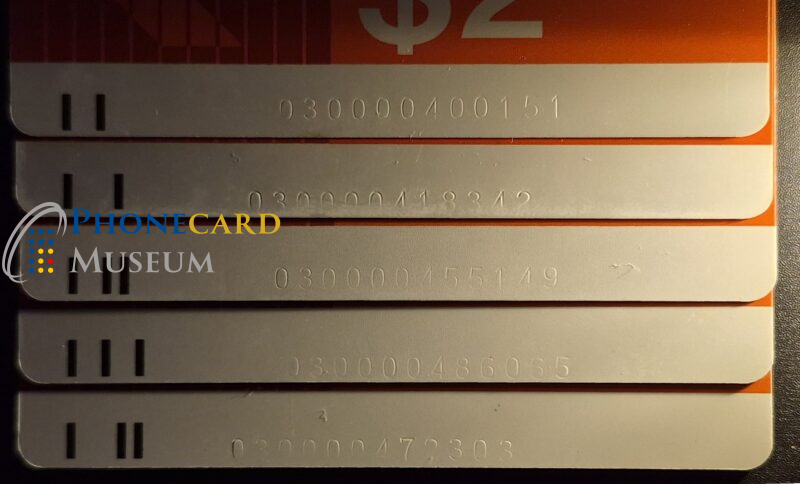
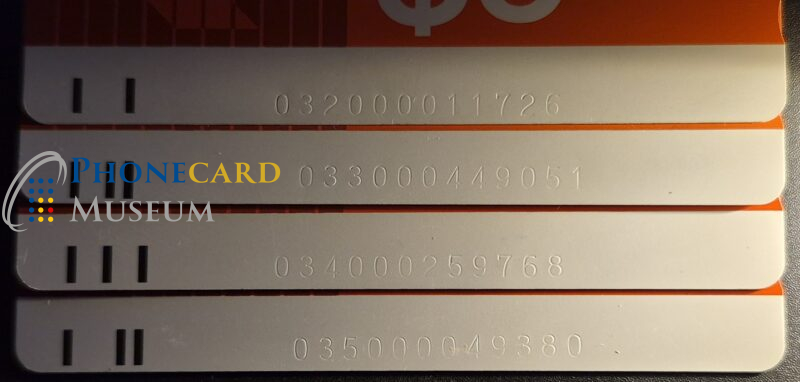
First let us show the early Anritsu codes for Singapore. The first series without notch follows on from the Telecom 83 card, with 030000..., but the second series WITH notch adds a second digit corresponding to the card number in the set
032000... is the second value $5,
033000.. is the third $10 etc. (The $2 was not re-issued with notch, so 031000... was not used)
034000...$20
035000...$50
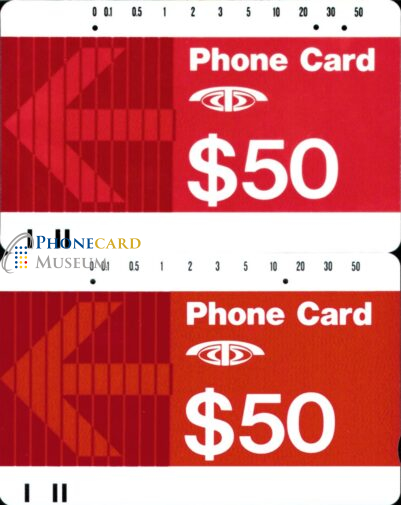
The Tamura 83 from Japan starts with code 3000... This is because prefix codes were assigned to the different card values, and corresponds to the number of bars on the front of the cards (on the reverse in cards after 1987)
200..... for 50 unit cards with 2 bars
300..... for 100 or 105 unit cards with 3 bars
400..... for 300 or 320 unit cards with 4 bars
500..... for 500 or 540 unit cards with 5 bars
700..... for Service cards with 7 bars probably with high units, possibly 1000 units?
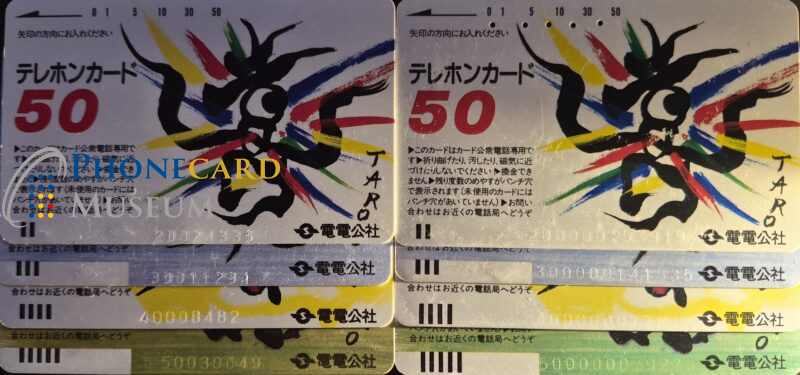
The first issue series have 8 digit control, and the second issue onwards were issued with 12 digit numbers, but numbers following on from the first series. Similarly, the service cards were first issued with 8 digit control, but from second issue, also had the 12 digit number. Notice also, that the 1982 bars were quite short, and were lengthened with each subsequent issue, finally extending to the edge of the card by late 1986 to early 1987. This is different to the UAE field trials of 1986, where the shorter bars already extend to the edge of the card, but are full length for the 1987 field trials.
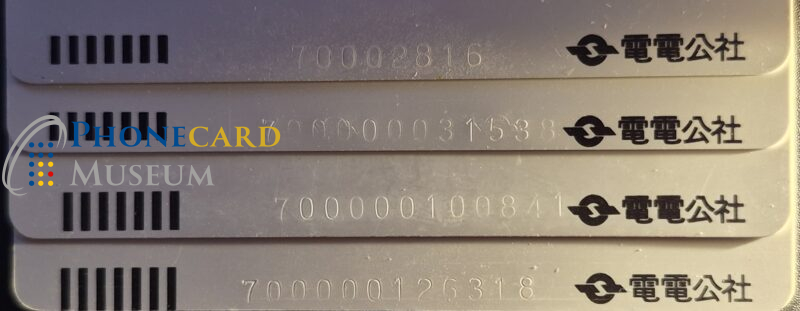
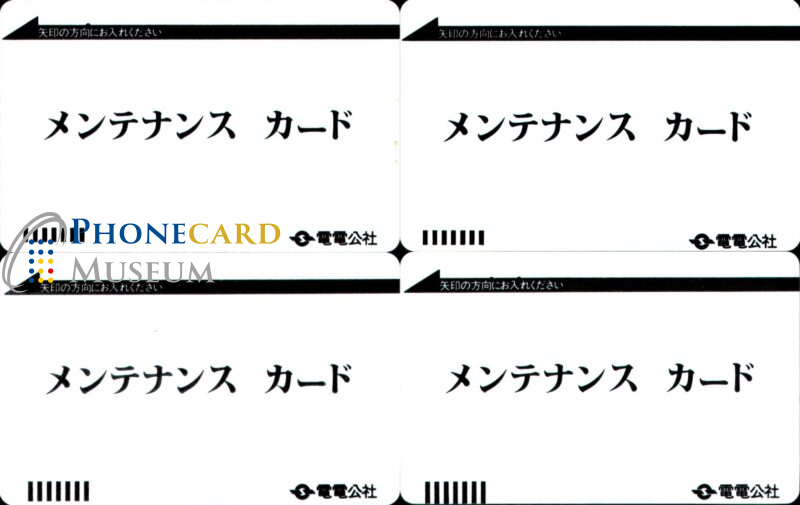
Now, with Tamura outside Japan, starting with the Telecom 83
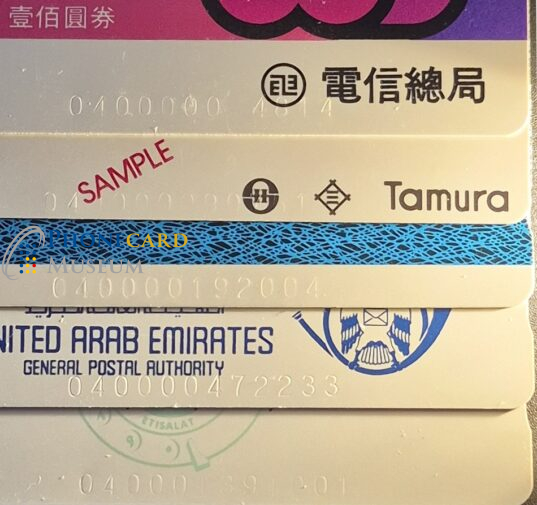
040000031896 Telecom 1983
040000034814 Taiwan Demo 1984?
040000090751 Malaysia Demo 1985
040000092004 Colombia Field trial 1985
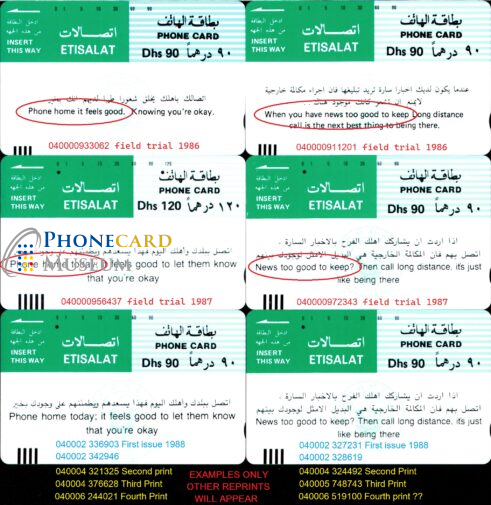
040000472233 First United Arab Emirates field trial 1986
040001891001 Last known Field trial of UAE (1987) before 1988 National public issue.
NOTE: All UAE national 1988 Slogan issues are numbered above 040002000000. The first 1988 UAE issues are in the 2 million serial range beginning 040002 ### ###, and for the second series of slogans are in the 7 to 10 million range.
You may notice that the last card in the above picture, is difficult to read without visual aid. This is because the cards from 1987 onwards were manufactured slightly thinner, and the stamped controls became less visible. with the digits 8 and 9 being particularly hard to read. 1990 issues onwards are often very difficult, even with high magnification and light.
After 1986, Tamura issued cards with 0400... serials ONLY for United Arab Emirates. The main reason is that Venezuela became the second large scale contract for Tamura Payphones, and a 4 digit date code to track production dates came into use.
The first pictorial series of Venezuela were reprinted numerous times from March 1987 (0387...) to January 1989 (0189....) So, when reading early Venezuela the first 2 digits correspond to the MONTH, and the second 2 digits are the production year.
Please look at the section on Venezuela phonecards for the known dates of the first series.
Venezuela Phonecards
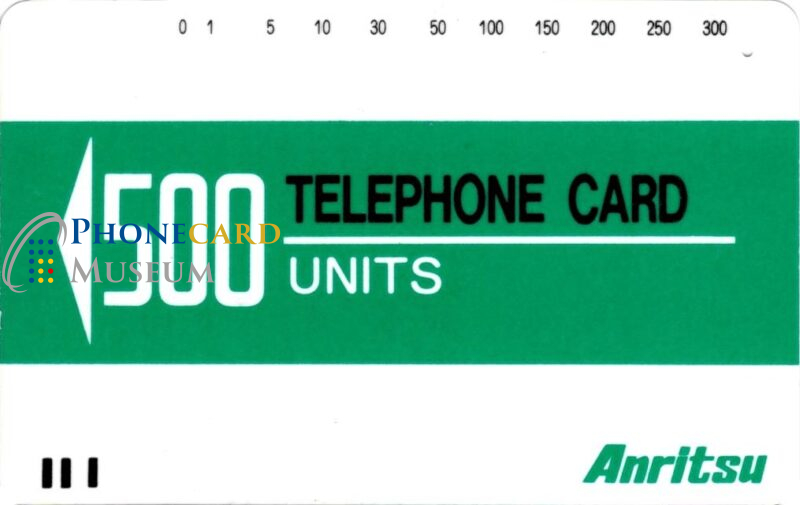
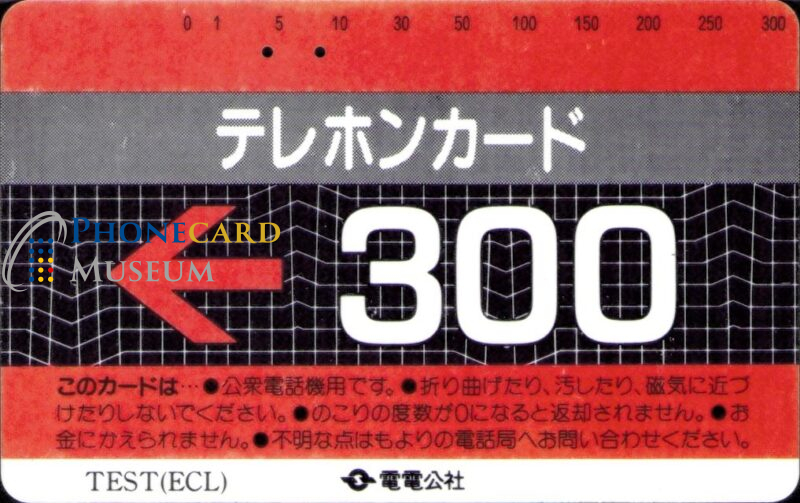
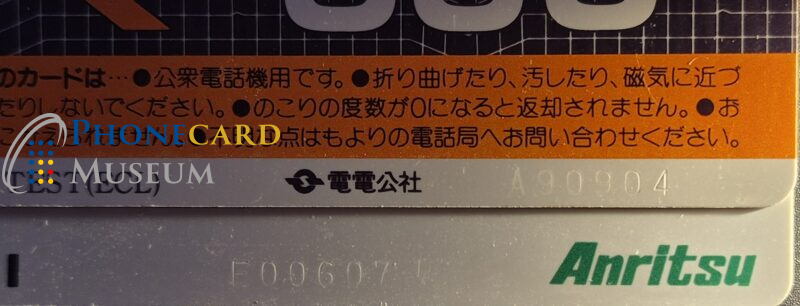
There exist also some special cards for both Tamura (A90904) and Anritsu (E00607). Early test or Demo cards, probably both from 1982. Here we show the 2 examples, both probably very rare.
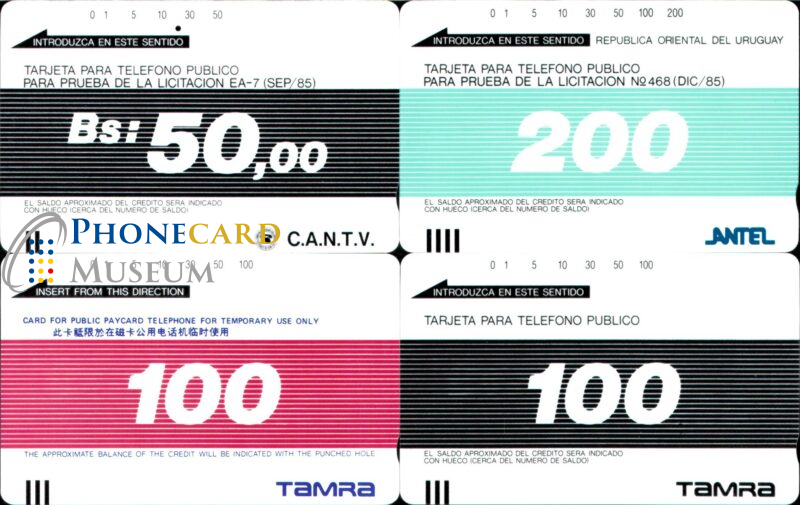
Tamura produced a number of demos and field trials in the years 1985-1990. Some of the early ones had a simple yet striking design. 4 cards here, Venezuela, Uruguay, China, and Argentina.
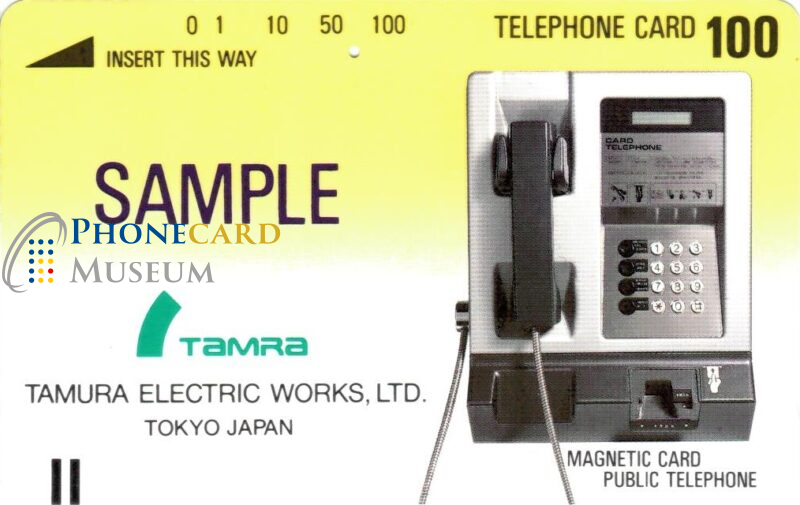
There is a lot of confusion with regard to the word "SAMPLE" on Tamura and Anritsu cards. Some believe that these cards are DUMMIES or inactive cards. This is mostly untrue. Tamura produced many cards with SAMPLE in the printed design, and most of these were fully functional, and encoded. Many used examples have been found. Here we can show a real DUMMY of the Telecom 87 SAMPLE card.
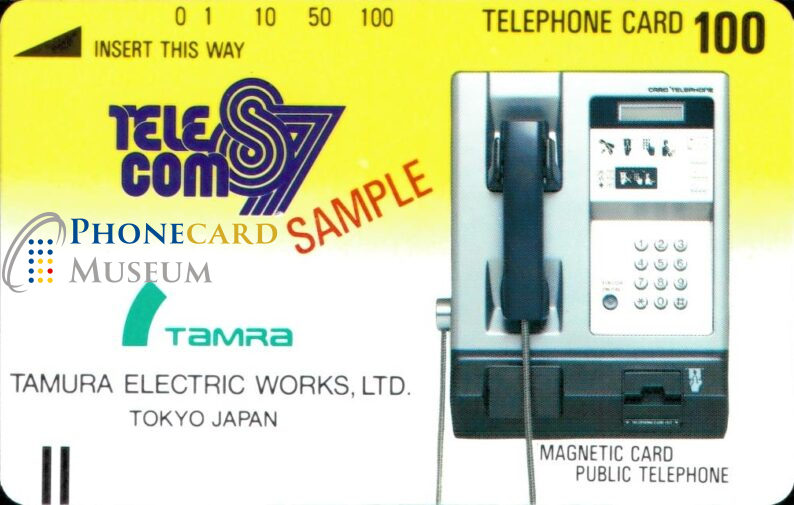

and the real live used version.