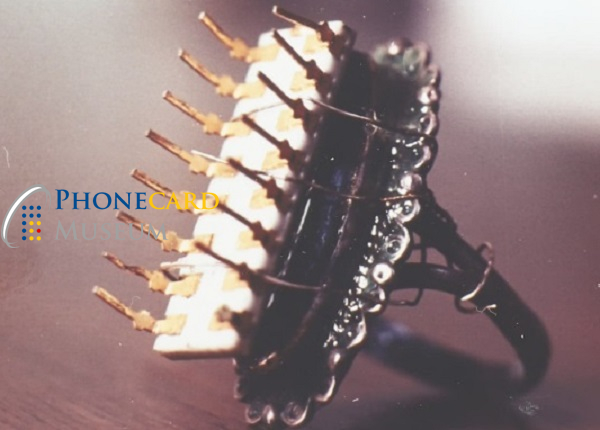
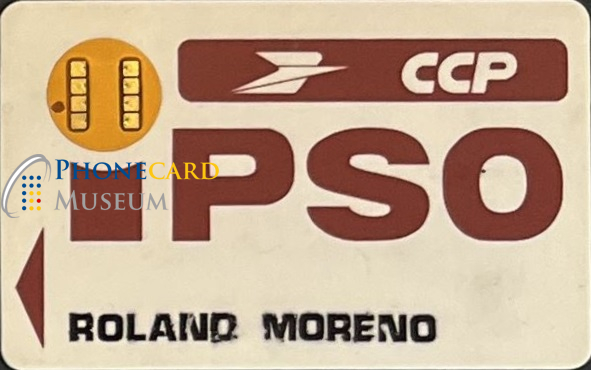
Roland’s first patent in 1974, relating to smart card technology was actually a Smart ring concept.
This idea was not so practical, but encapsulated the concept of an everyday functional smart device.
Moreno re-imagined the concept in 1975 as a chip embedded card, and began work on the hardware to facilitate transactions for smart banking EFTPOS, using smart card technology.
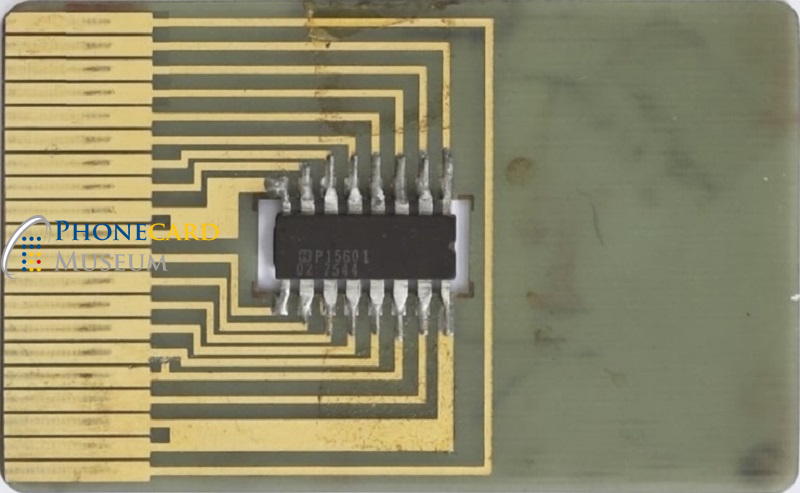
Roland’s first prototypes were a mass of complex wiring, and it took some time to arrive at a system that would be presented to the French banking systems. The French government and banks took notice, and even as early as 1980, a number of banking prototypes were being tested, as well as a number of other non banking concepts. Some of Roland Moreno’s original EFTPOS demonstration hardware was auctioned publicly in 2026, and we can show some of these images.
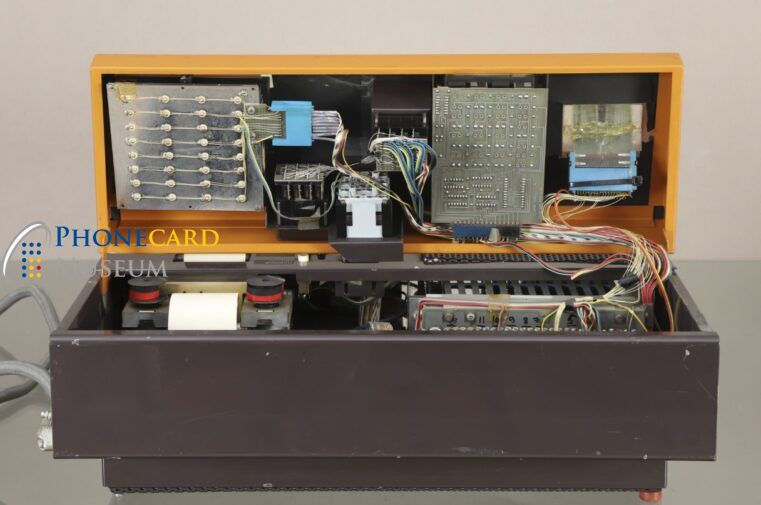
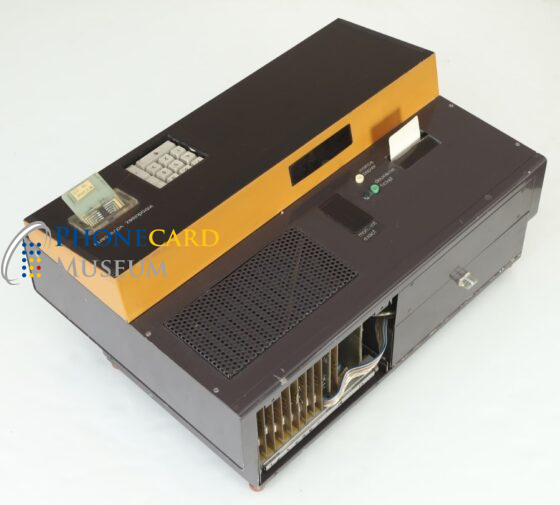
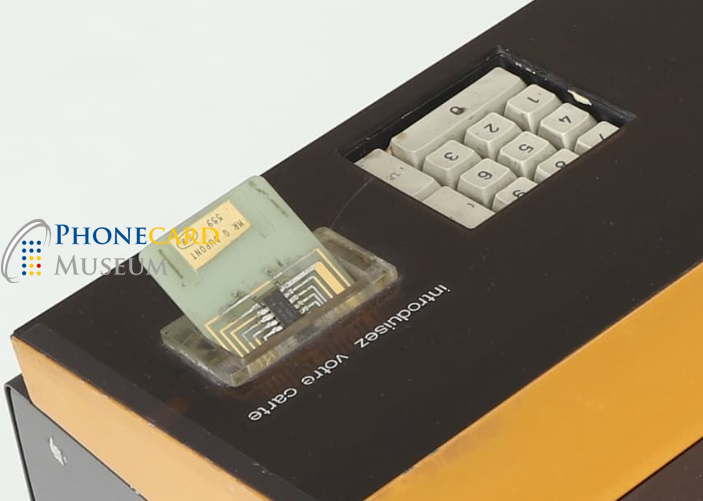
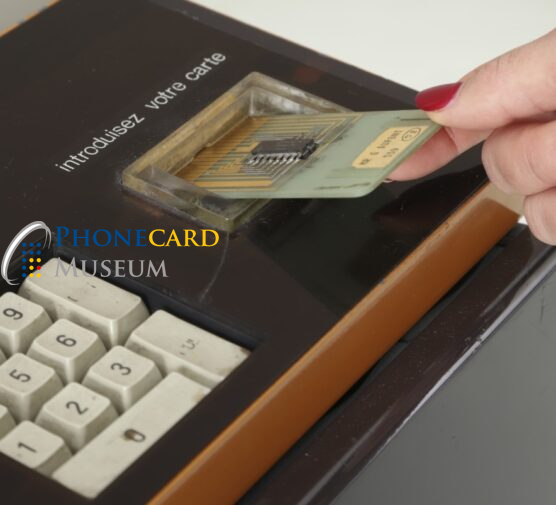
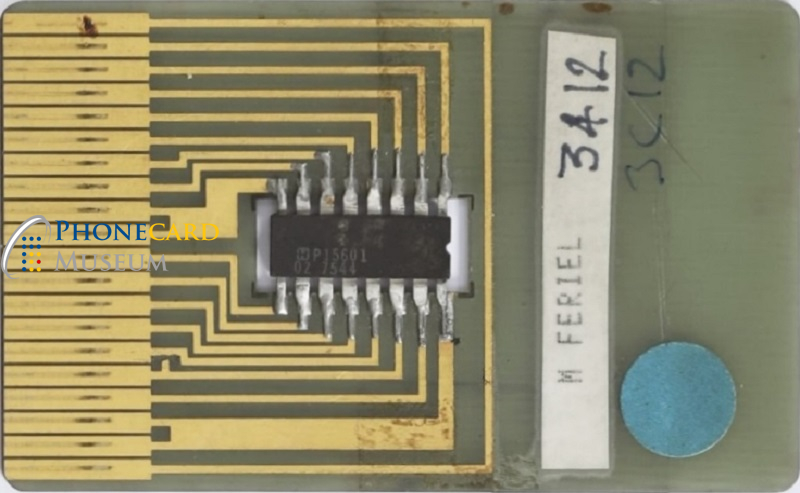
The cards used in this device had a more complex wiring than other smart card designs. There were 20 blade contacts wired to the central chip. The Germans called these “messerkontakt” meaning knife, or blade contacts. Moreno’s system incorporated the known PIN number function already employed in ATM systems since 1967.
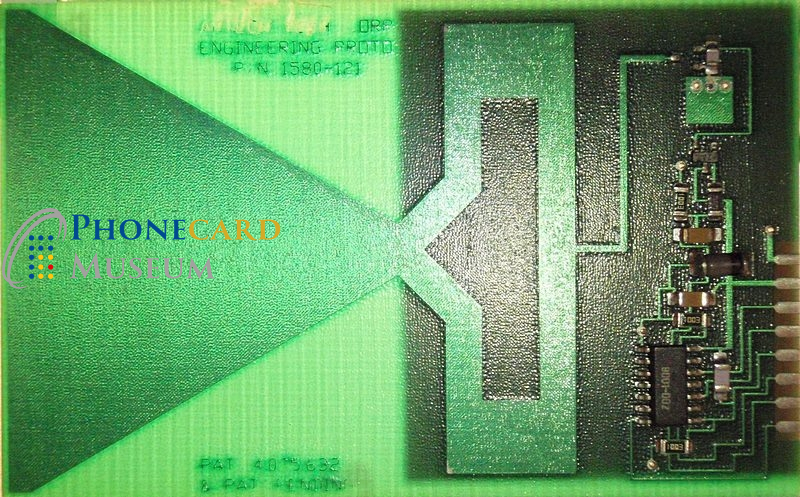
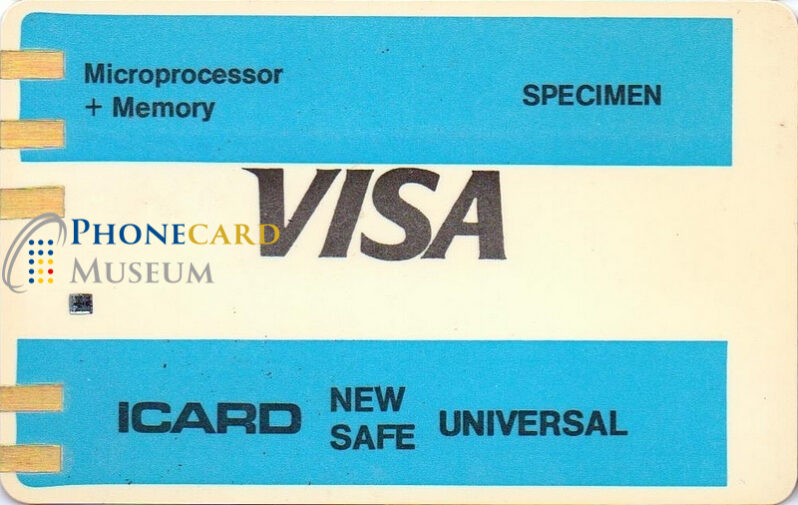
Jurgen Dethloff and Helmut Grotrupp in Germany, took out Smartcard patents as early as 1969, and Dr. Kunitaka Arimura lodged a foundational IC card patent in Japan in March 1970. At the time of writing, we have no access to prototype images of Arimura technology, but we can show an early engineering prototype of Jurgen Dethloff mid 1970’s, as well as an early specimen card for VISA from the late 1970’s. Both cards have the “messerkontakt” used on early European chip card technology. Please note the triangular plate on the green engineering prototype, which is actually an ANTENNA for the contactless function of Dethloffs patent. Notice also, that the product name patented by Dethloff (and shown on this VISA demo card) is “ICARD”. This VISA “ICARD” is non functional, but has a real, basic type silicon chip embedded, without any connective circuit wiring.
In Japan, there were a number of smartcard banking trials conducted by various banks in the 1980’s, based on Arimura patents. These cards are hard to obtain, as the trials were often small in scale, with as little as 500 cards produced. Casio developed Microcard based on Arimura patents, and supplied Smart banking cards to field trials in USA as well as Japan.
In Germany, 2 notable uptake of Dethloff patents need to be included in the French banking story. Giesecke and Devrient were involved in Smart card laboratory development from at least 1979, and the Joint venture development of Valvo and Philips in Germany is approximately contemporary with the G&D development.
G&D cards were manufactured in Germany for the Lyon IPSO trials on behalf of Flonic Schlumberger from 1980-1984. During this time, Flonic Schlumberger set up French manufacturing facilities, in preparation for Phonecard production, and some smart banking card production on a lesser scale.
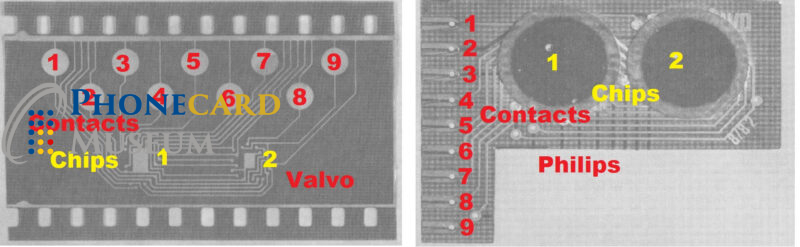
Valvo-Philips developed 2 distinct Smart card designs, under the inventor and developer Dr. Ing. Wolfgang Kern. Philips Germany cards used the 9 Messerkontakt interface, and Valvo, (a Philips subsidiary) with a 9 button contact interface. Both Smartcard types incorporated a 2 chip architecture.
It is interesting that both vastly differing designs were produced in partnership and exhibited in the single technical manual. This is held in the reference collection, obtained from Dr. Kern (RIP).
(Thanks to Markus Gleich)
The important technology relationship MUST be emphasized. The French Philips development is directly linked to the German Philips advancements led by Wolfgang Kern. Philips in France also set up laboratory development of a 2 chip module that was used in the IPSO project, connecting them to the contemporary German Philips development.
So, here we must acknowledge that 2 out of 3 participants in the IPSO trials in France were based on BOTH the French patents of Roland Moreno, AND the German patents of Jurgen Dethloff and Helmut Grottrup. Anyone questioning these relationships ignores the reality of concurrent technological developments and relationships between Germany and France. The primary ties were under the Innovatron patents though, due to the Trials taking place inside France.
The reference collection contains original documents and cards establishing these technological relationships. For example we can compare the Valvo-Philips German cards with the Philips cards of France. The white card shown here is a Philips France laboratory card, with the same 2 chip layout as the IPSO cards. We have added some edited technical manual pictures to show the internal 2 chip layout of the German cards. The larger chip is a dedicated microcontroller IC (Intel 8051) for executing commands, and the second chip, a memory IC (typically an EEPROM) for data storage. Please note the 9 contacts on the German cards as described in the patents of Jurgen Dethloff, whereas the French Philips version has only 8 contacts that became standard for France, and for Germany G&D and Siemens too.
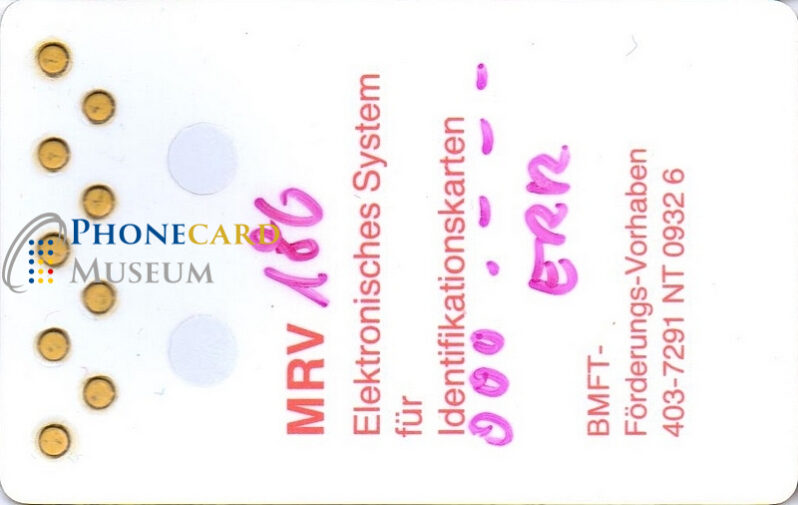
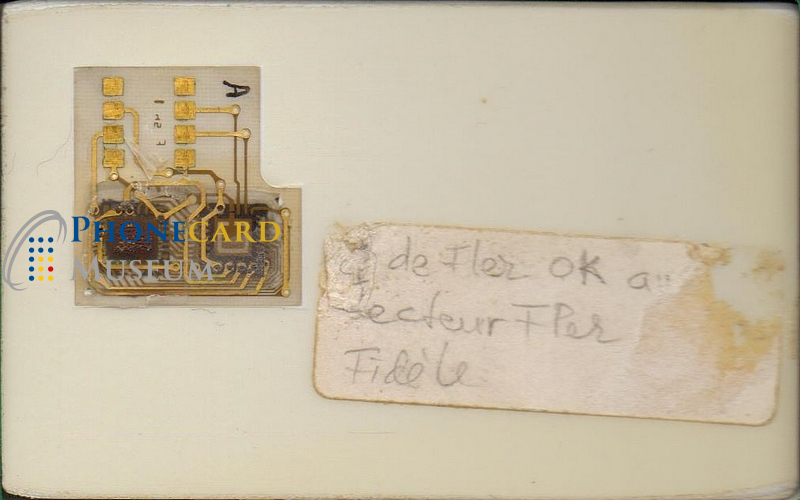
IPSO-Caen
SINGLE chip EFTPOS development (Moreno and Dethloff patents)
The first MONOLITHIC silicon microprocessor was developed in 1979, by Motorola . It was the first secure single monolithic integrated circuit microcontroller. The 68HC05 chip, integrated the CPU, RAM, ROM, and EEPROM onto a single monolithic integrated circuit. Honeywell Bull began using this chip as the basis for their early Smart card preparation for EFTPOS trials in France. G&D in Germany were also using the Motorola chip in their prototype development for IPSO, and also for smart phonecard demos for German Telecom in competition with Siemens.
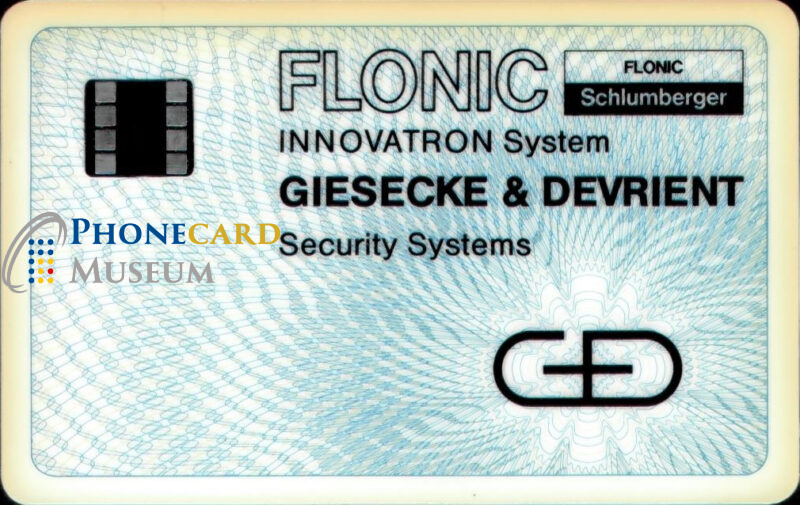
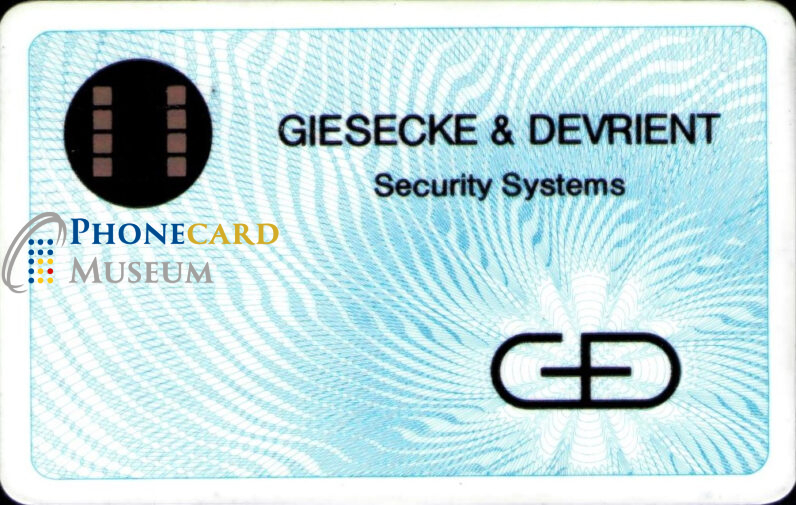
Here we show 2 early laboratory G&D prototypes from late 1979 to early 1980.
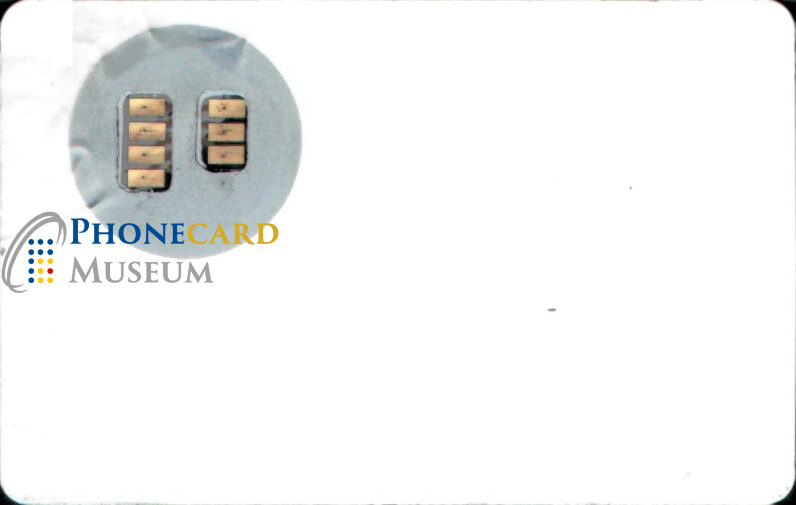
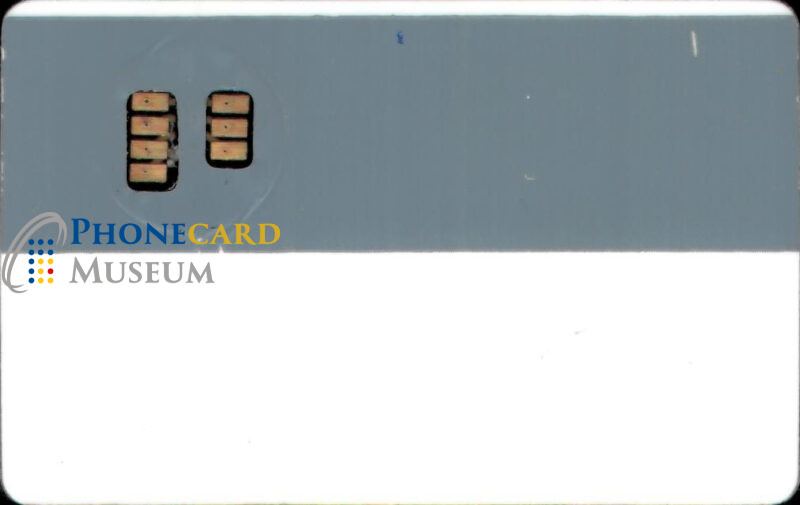
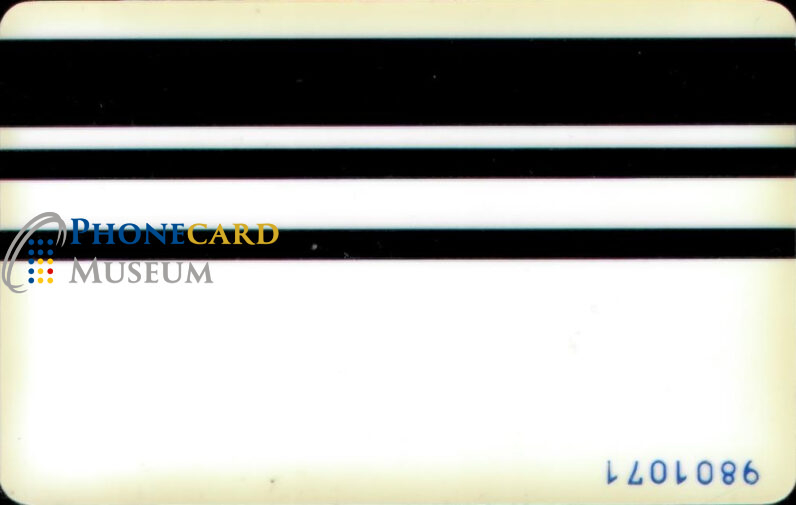
G&D were involved with Flonic Schlumberger in France from the very beginning, and very early G&D demos advertised the Innovatron licence, as well as Flonic relationship. On some of the demos, the magnetic band on the reverse are distinctly TRANSAC triple band for the French banking system.
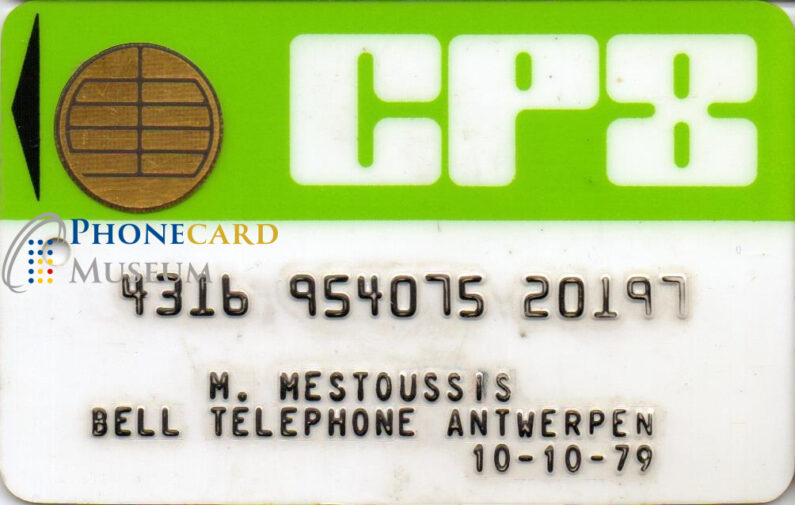
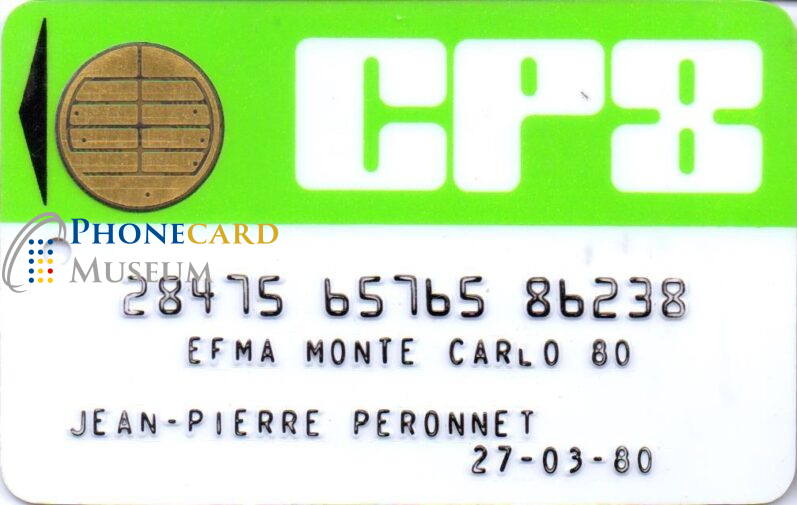
Honeywell Bull’s prototypes were called CP8, and this was a prominent feature of early test cards and some demos. The earliest dated CP8 card is a demo for Bell Telecom Belgium from October 1979. We also show here a demo card for EFMA 1980 with same early contact design, but an engineering refinement. The 1979 module was slightly raised from the plastic surface as a result of bonding the circuits to the contact surface. By early 1980, pin punctures were added to reduce the module thickness, resulting in a contact surface sitting flush with the plastic card surface. Cards were still slightly thicker than ISO standards during 1980.
Who missed out on the EFTPOS saga?
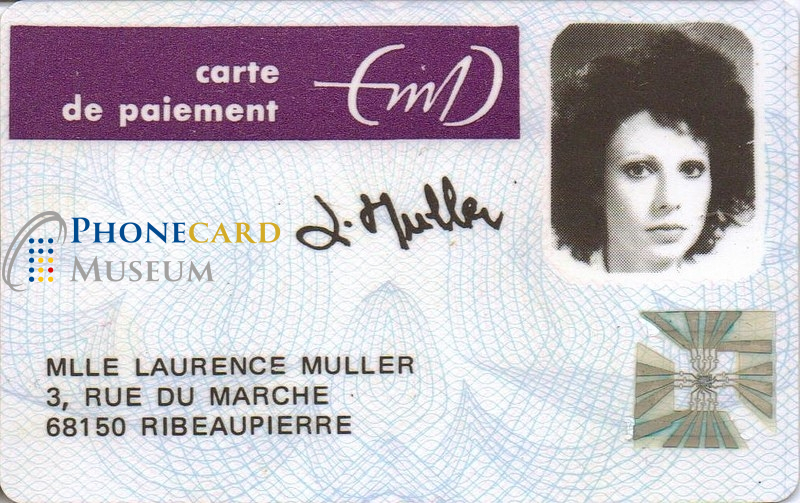
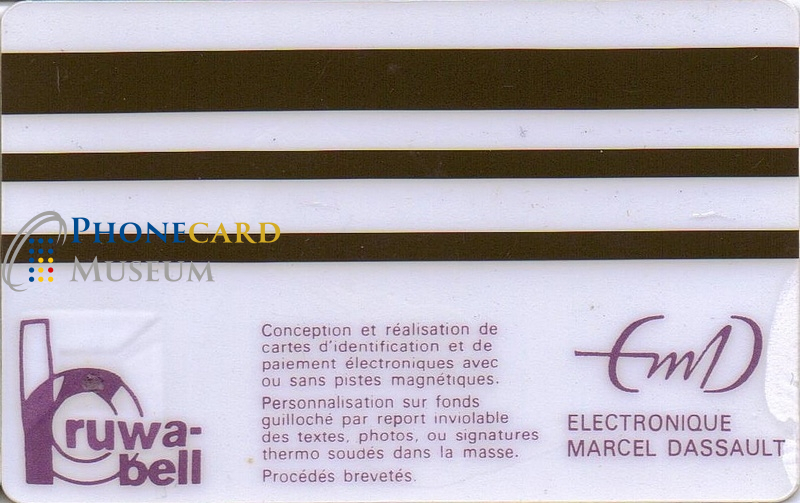
The French government and banks awarded only 3 contracts for Smartcard banking and phonecard development in France in 1980. Another 4th company did want to be involved, but missed out. Électronique Marcel Dassault (EMD) even prepared a demonstration card in 1979, but were excluded for unknown reasons. Their single demonstration card is actually quite beautiful in design and facsimile module. The EMD demo is actually manufactured by the prominent bank card production company Ruwa-Bell who also manufactured the early French Philips smart cards.